After the pandemic, I noticed a shift in the way management had treated employees as the company that I was employed rapidly started automating many of its core functions. What concerned me most was not the technology itself—it was the shifting relationship between management and employees. A Global Manager even told me, “You don’t need to hire really smart people anymore—AI will take care of the heavy lifting.” That comment crystallized a trend I did not want to be part of, so I chose to leave and pursue work that felt more aligned with my values.
I moved into municipal government, hoping to use my skills to improve operations and drive efficiency. What surprised me most about that shift was the outsized influence of labor unions and how outdated many workplace norms were. Rather than focusing on improving services for residents, many employees seemed more invested in maximizing personal gains from their collective bargaining agreements. Still, I came to see that these behaviors were not irrational; they were responses to a system shaped by decades of rigid rules and entrenched interests.
Seeing both extremes – tech-driven detachment in the private sector and status-quo comfort in the public sector made me think about what kind of workplace the next generation is stepping into. How do young professionals find meaning, growth, and security in the work world? What do young people really need to thrive in workplaces that are going through major changes?

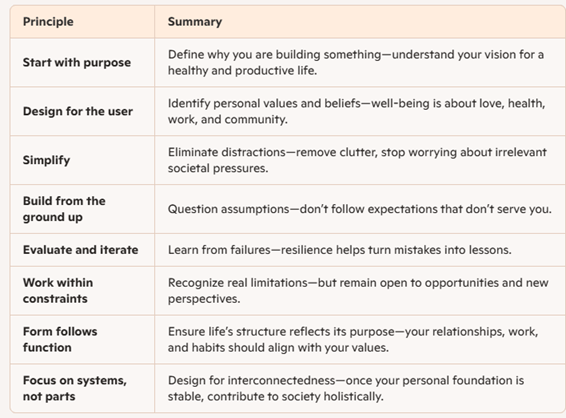
That’s when I started thinking in terms of First Principles—a concept from design and engineering that asks you to strip things down to the core truths and build from there. What if we approached our careers this way? What if we designed a life based not on other people’s expectations, but on what we truly need to thrive?
To try to advise my own seventeen-year-old child, I found myself thinking about the basics, including what will she need to be self-sustaining. I asked myself how I would create my life if I could do it all over again. The first thing I should have done was to get clarity about what I am good at and how I might be of service in a way where I kept some control over my livelihood. Instead, I got a degree in liberal arts and took jobs that offered me the most money. I followed advice, chased security, and built a career that looked good but I got tired of acting like the work I did was meaningful. In other words, I never took control of my direction and never knew my why.
“When you know why you are doing a thing, every choice becomes intentional, every obstacle turns into a lesson, and every success feels meaningful.”
What is the First Principle of Design? It is about creating a life where you try to cut anything unnecessary, like office politics and focus on what really matters, adding value so you can sustain yourself. A person adds value by enhancing their skills, knowledge, and contributions in ways that help others and align with their strengths and values. This can be achieved through continuous learning, improving efficiency, and focusing on meaningful work that makes a positive impact.
Let’s take a closer look at how the First Principle can help us gain some clarity.
Conclusion
In my opinion, this principle can help you sustain yourself by ensuring that your work is meaningful and aligned with your strengths. As we navigate a changing economic landscape marked by uncertainty and increased automation, it is important to keep seeking meaning and value in our lives. Embracing this principles helps us stay grounded and productive in a way that honors our individuality. Let us continue to strive for a balanced approach that ensures that we keep our authenticity and live richer and more fulfilling lives in a way that serves our communities.
When you lead with purpose, you don’t just survive—you thrive.

 Valorisa